
Boy group · Debut 2013
BTS
Seven voices spanning the raw energy of early hip-hop and the pop-soul warmth of later releases.
An independent K-pop field guide
Find your next favorite group, get to know the music, and go deeper into the culture behind it.
The lineup
Boy group · Debut 2013
Seven voices spanning the raw energy of early hip-hop and the pop-soul warmth of later releases.
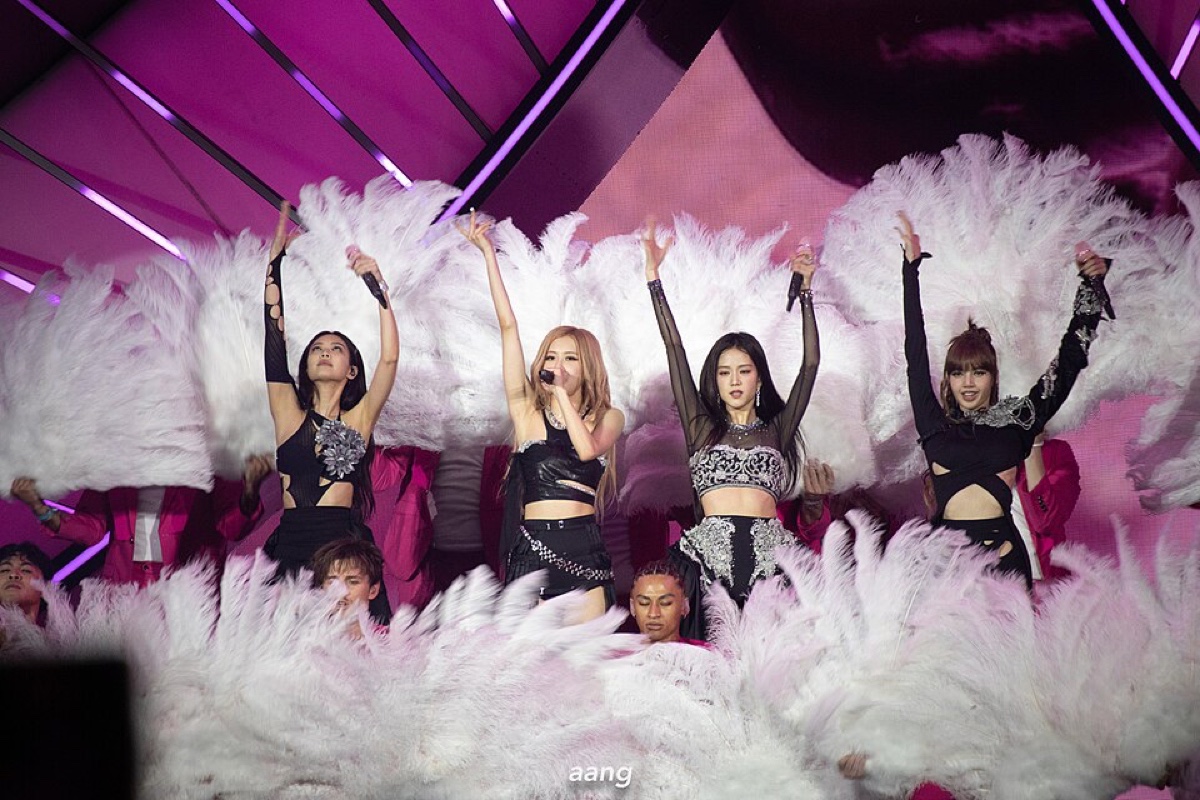
Girl group · Debut 2016
Four performers with a flair for sharp rap verses, big hooks, and dramatic stage production.

Girl group · Debut 2015
Nine members whose bright singalong choruses grew into a catalog rich in disco and synth-pop.
The journal
In K-pop, a comeback is an artist's return with new music. A typical rollout starts with an announcement and a schedule. Those dates might mark the arrival of concept photos, a track list, a highlight medley, or a music video teaser. Together, they give fans clues about the sound and visual mood of the record.
On release day, the title track usually gets the music video and the bulk of promotion. Watch a music-show stage after the video. Without the cuts between sets, the formations and small gestures in the choreography become much easier to spot. Then listen to the B-sides to hear where the group goes with more room to experiment.
At a K-pop concert, fans often carry a light stick designed for the artist. Shapes can reference a logo, a lyric, or the relationship between the group and its fandom. The lights become a way to spot fellow fans, from the queue outside to the farthest seats in the arena.
At some shows, compatible sticks can change color in sync with the production. A ballad might fill the arena with one steady color. An uptempo track can send pulses across the seats on the beat. The stage lighting reaches all the way out to the audience, and the crowd becomes part of the performance.
Dance practice videos often use a wide shot that keeps the whole group in frame. Follow a single performer and see how far they travel between the verse and the chorus. Then replay the same passage and watch the group as a whole. A transition that looks effortless can depend on several dancers crossing paths at once.
Look for the movement a group repeats during the chorus. This recognizable gesture is often called the point choreography. Its timing or shape can echo a lyric, and it is usually the part fans learn first.
Listening room
Three tracks to hear how differently K-pop can move, from a bright dance hook to a rap-led anthem.
Fan vocabulary
BTS debuted in 2013 with 2 Cool 4 Skool. The lineup brings together RM, Jin, SUGA, j-hope, Jimin, V, and Jung Kook. Early songs made room for pointed rap verses and questions about school and ambition. Later releases took that same interest in growing up into dance pop and ballads.
Start with “DNA” for a bright, electronic sound and “Spring Day” for a slower song about distance and longing.
Official debut releaseJisoo, Jennie, Rosé, and Lisa debuted in 2016 with Square One. The release pairs the stripped-down groove of “Whistle” with the dance-floor rush of “Boombayah.” That contrast is a good introduction to a group equally at home in a sparse verse and a stadium-sized chorus.
Start with “DDU-DU DDU-DU” for its forceful hook, then try “Lovesick Girls” for a more melodic side of the group.
Official discographyTWICE made their debut in 2015 with The Story Begins and its lead single “Like OOH-AHH.” Their early singles made playful hooks and easy-to-recognize choreography part of their identity. Releases such as Eyes Wide Open broadened that sound with retro synth textures.
Start with “What Is Love?” for classic TWICE and “I Can't Stop Me” for the group's synth-pop sound.
Official debut release